

Founder Note
I Built This Because Small Farms Lose Data Before They Lose Money
A founder note on why small sheep farms need simple, practical flock records before problems turn into lost profit.
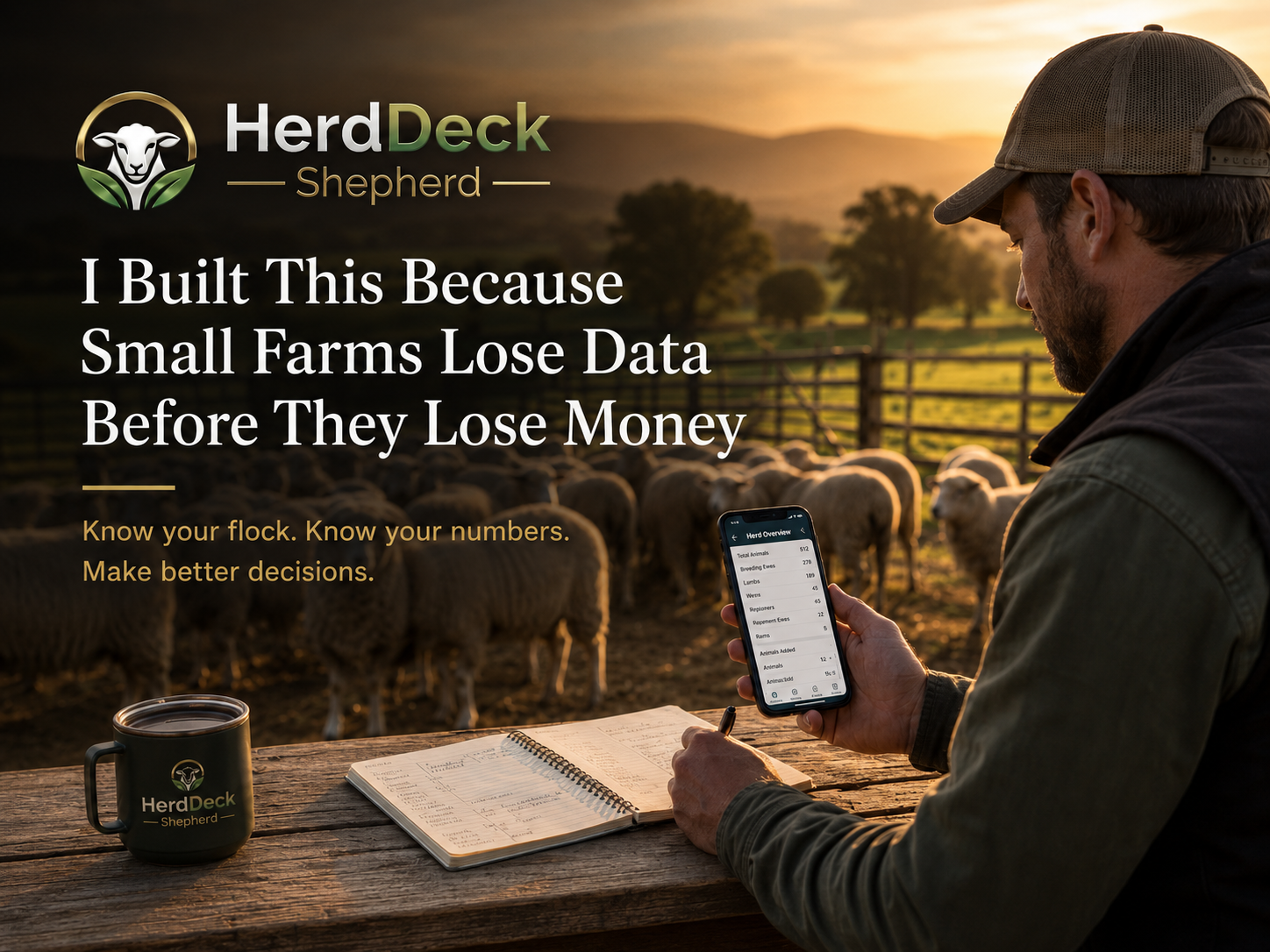
A founder note on why small sheep farms need simple, practical flock records before problems turn into lost profit.
Most small sheep farms do not fail because the farmer does not care.
They fail slowly because useful information disappears before it becomes a decision.
A ewe is treated, but the treatment is not easy to find later. A lamb grows slowly, but nobody compares it with its siblings. Feed costs rise, but the real cost per group is not visible. A ewe misses a lambing season, but the farm remembers her as usually good because there is no clear history in front of the farmer.
This is how small farms lose data before they lose money.
The problem is not laziness. Most sheep farmers are already busy. Lambing, feeding, water, fencing, health checks, sales, weather, family work and daily surprises leave little room for perfect paperwork. A small farm does not need a complicated office system. It needs a simple way to keep the information that actually changes decisions.
That was the reason behind HerdDeck Shepherd.
The idea was not to build a generic livestock app and then add sheep as one option. Sheep farms have their own rhythm. Breeding, lambing, groups, feed, health, stock, sales and costs are not separate topics in real life. One health problem can become a finance problem. One feeding decision can change lamb growth. One missing record can make a bad ewe look acceptable for another year.
Small farms need clarity, not complexity.
A useful flock record should answer practical questions quickly. Which animals are active? Which ewes lambed? Which lambs are growing well? Which animals received treatment? What feed is in stock? What did this group cost? Which sheep should be watched again? Which decision was based on memory instead of data?
These questions are simple, but they are hard to answer when information is scattered across notebooks, messages, receipts, photos and memory.
Good data does not make a farmer less experienced. It protects experience. It gives memory a structure. It lets a farmer compare seasons, notice repeated problems, and make calmer decisions when the day is already busy.
For a small sheep farm, the goal is not to record everything. The goal is to record the things that matter before they disappear.
That means animal identity, group changes, lambing history, treatments, feed movements, expenses, income, weights, deaths, culling reasons and the small notes that explain why a decision was made. Over time, those records become more than data. They become the farm’s memory.
HerdDeck Shepherd was built around that idea: know your flock, know your numbers, and make better decisions with the information you already create every day.
A small farm may not have a large office, a data team or a full-time manager. But it can still think clearly. It can still know which animals perform, which costs are rising, and which problems keep returning.
Profit is not only found at sale time. It is protected in the small records that stop preventable losses from becoming normal.
That is why the first step is not always buying more animals, more feed, or more equipment. Sometimes the first step is simply keeping the flock’s story from disappearing.